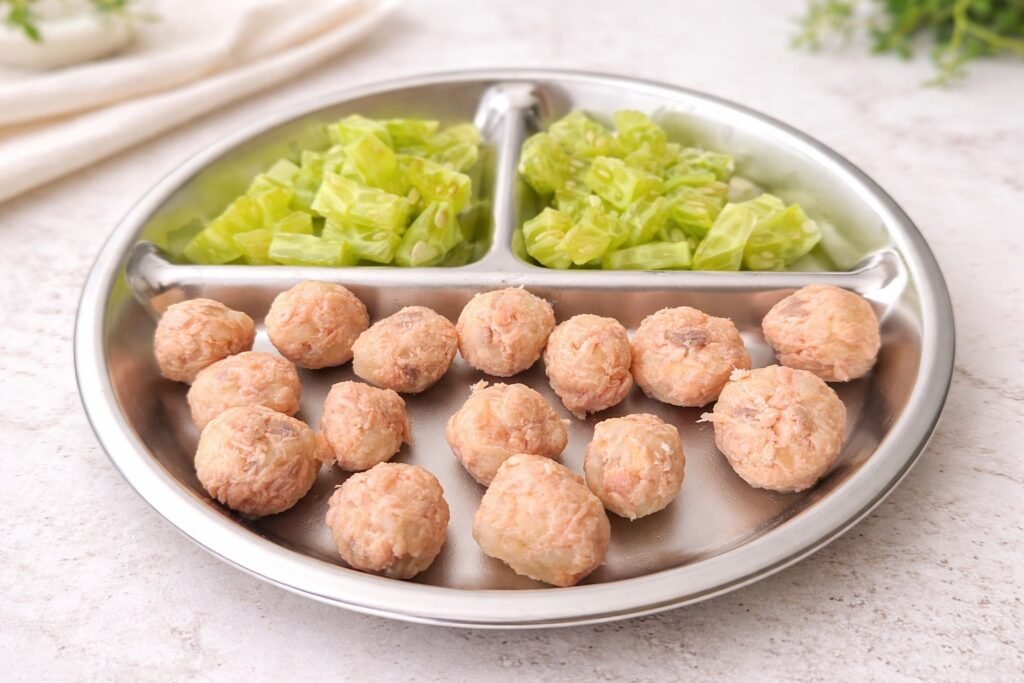
This is a very healthy meal for babies and toddlers and works well for baby-led weaning. The soft texture makes it easy for little hands to hold, encouraging self-feeding and independence at mealtimes.
Salmon is rich in high-quality protein and omega-3 fatty acids (EPA and DHA), which research links to improved brain development, reduced inflammation, and improves heart health. Potatoes provide gentle, easily digestible carbohydrates that support steady energy and growth in toddlers. They also add potassium and vitamin C while helping create a soft, cohesive texture that makes the salmon balls easier and safer for little ones to eat.
Prep time: 1 minute
Cook time: 15 minutes
Serves: 1–2 toddler servings***
Total Calories (Whole Recipe): Approximately 260–290 kcal total
Ingredients
- About 100 g skinless salmon (about 3.5 oz)
- 4 tbs boiled potatoes
- A pinch of pepper (optional, for older toddlers)
- Oil, for frying salmon
Equipment
- Stainless steel frying pan
- Pan lid
- Fork
- Plate
Instructions
- Heat a stainless steel pan over high heat. Add a small amount of oil, then reduce the heat to low.
- Place the salmon in the pan and, if using, sprinkle a pinch of pepper over the top.
- Cover with a lid and cook on low to medium heat until the salmon is cooked through.
- Remove the salmon from the pan and place it on a plate to cool. Cutting it into small pieces will help it cool faster.
- Once cooled, gently flake the salmon with clean hands and carefully check for any bones.
- Add the salmon to the cooked potato and mix well using a fork.
- Using clean hands, shape the mixture into small, soft balls suitable for babies or toddlers.
Toddler & Family Notes
- Omit pepper if serving younger toddlers.
- Ensure all salmon bones are removed before serving.
- Always check ingredients for allergies before offering to babies or toddlers.
- Looking for another toddler-friendly salmon recipe? Our Soft Salmon Rice & Quinoa Balls for Toddlers are a gentle, nutritious option.
*** Serving sizes are indicative only. Toddler portions may vary and should be based on your child’s age, appetite, and developmental stage.