This fermented mixed vegetable recipe is a simple, traditional way to support gut health while enjoying a variety of colourful, nourishing vegetables. Made with beetroots, radishes, cauliflower, fresh herbs, spices, and chilli, it naturally ferments in a light salt brine, allowing beneficial bacteria to develop.
Fermentation not only helps preserve vegetables, but also makes them easier to digest and enhances their natural flavours. The result is a tangy, crunchy mix that can be enjoyed as a side dish, added to meals, or eaten in small amounts daily.
This recipe includes several anti-inflammatory ingredients such as turmeric, beetroot, ginger, garlic, herbs, and chilli. These foods are traditionally valued for their ability to support the body’s natural inflammatory balance. Combined with fermentation, they help nourish the gut microbiome, which plays an important role in digestion, immune function, and overall wellbeing.
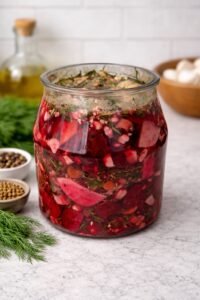
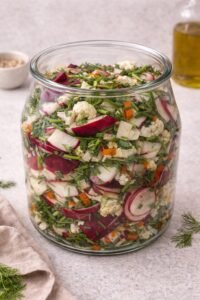
This colourful mix of fermented vegetables is rich in natural probiotics and flavour. Thin slicing helps even fermentation and keeps the vegetables pleasantly crunchy while allowing beneficial bacteria to thrive.
Radishes (both white and red) support digestion, gut health, and the body’s natural detox processes. They are rich in antioxidants and minerals, help reduce bloating and inflammation, and become even easier to digest and more gut-friendly when fermented.
Beetroot is rich in antioxidants and natural nitrates that support blood flow, heart health, and overall circulation. It also supports liver function, helps reduce inflammation, and provides fibre that nourishes gut health, especially when eaten fermented or lightly cooked.
Cauliflower is rich in fibre, vitamins C and K, and sulfur-containing compounds that research links to reduced inflammation and improved detoxification pathways in the body. Studies also suggest it supports gut health, immune function, and may help protect cells from oxidative stress through its antioxidant content.
Ginger, turmeric, garlic, and red chilli are widely studied for their anti-inflammatory, antioxidant, and immune-supporting properties. Research shows they help reduce oxidative stress, support digestion, improve circulation, and contribute to the body’s natural inflammatory balance.
Fresh herbs and spices such as dill, oregano, mint, rosemary, and cumin provide polyphenols and antimicrobial compounds that support gut health and help protect beneficial bacteria during fermentation. Together, these ingredients enhance flavour while supporting digestion, microbial diversity, and overall metabolic and immune health.
Ingredients
Ingredient
Vegetables ( about 1.8–2.0 kg total, sliced)
- Beetroot (thinly sliced): 450 g (about 2 medium beetroots)
- Cauliflower (small florets): 350 g (about ⅓–½ medium cauliflower)
- White radish / daikon (thinly sliced): 300 g
- Red radish (thinly sliced): 150 g
- Garlic (thinly sliced): 40 g (about 1 large bulb)
- Fresh ginger (thinly sliced): 40 g
- Fresh turmeric (thinly sliced): 25 g (or about 1½ tbsp dried turmeric slices if fresh isn’t available)
- Fresh red chilli, thinly sliced (1–2 chillies, adjust to taste)
Fresh herbs (lightly packed)
- Dill (finely chopped): 20 g (about ½ cup)
- Oregano leaves: 10 g (about ¼ cup)
- Mint leaves: 10 g (about ¼ cup)
- Rosemary leaves (finely chopped): 5 g (1–2 tbsp)
- Cumin seeds: 2 tbs
Brine (2% salt solution)
You will need approximately 1.5 litres of brine, depending on how tightly the jar is packed.
- Water: 1.5 litres (boiled and cooled)
- Kosher salt: 30 g (2% of water weight)
Tip: Always make a little extra brine so everything stays fully submerged.
Instructions
- Prepare the vegetables
Wash all vegetables well. Slice hard vegetables (beetroot, white radish, red radish, ginger, turmeric, and garlic) thinly so they ferment evenly. Cut the cauliflower into small, bite-sized florets.
Finely chop the herbs. - Prepare the brine
Boil 1.5 litres of water.
While the water is still warm, dissolve 30 grams of kosher salt completely.
Allow the brine to cool fully to room temperature before using. - Pack the jar
In a clean 2.8-litre glass jar, add the vegetables and herbs in layers, mixing them as you go.
Press them down firmly with clean hands or a spoon, but do not crush. - Add the brine
Pour the cooled saltwater brine over the vegetables until they are fully submerged.
Leave 2–3 cm of space at the top of the jar. - Keep vegetables under the brine
Use a fermentation weight or a small clean glass jar to keep all vegetables below the surface of the liquid.
This is essential to prevent mould. - Ferment
Close the lid loosely (do not tighten).
Place the jar at room temperature, away from direct sunlight, for 5–7 days. - Check daily
During fermentation, bubbling and liquid overflow are normal signs of active bacteria.
If vegetables rise above the brine, use a clean masher or spoon to gently push everything back under the liquid. - Refrigerate
After 5–7 days, once the vegetables taste pleasantly tangy, tighten the lid and transfer the jar to the fridge.
Cold storage slows fermentation and helps preserve flavour and texture.
Notes
- Always use clean utensils when handling fermented vegetables
- If you see fuzzy or coloured mould, discard the batch
- Flavour continues to develop slowly in the fridge
- Suitable for adults.